What is shingles and who gets it?
Shingles is a viral infection that causes a painful rash. It is caused by the same virus that causes chickenpox. If you have had chickenpox, the virus stays dormant in your nerve tissue. Years or decades later, it can reactivate as shingles.
You cannot catch shingles from another person. However, someone who has never had chickenpox could catch chickenpox from you if they touch the shingles rash.
Shingles is more common as you age. Most cases occur in people over 50. You are also at higher risk if your immune system is weakened, if you are under prolonged stress, or if you have had a recent illness or injury.
The key question: do you have shingles?
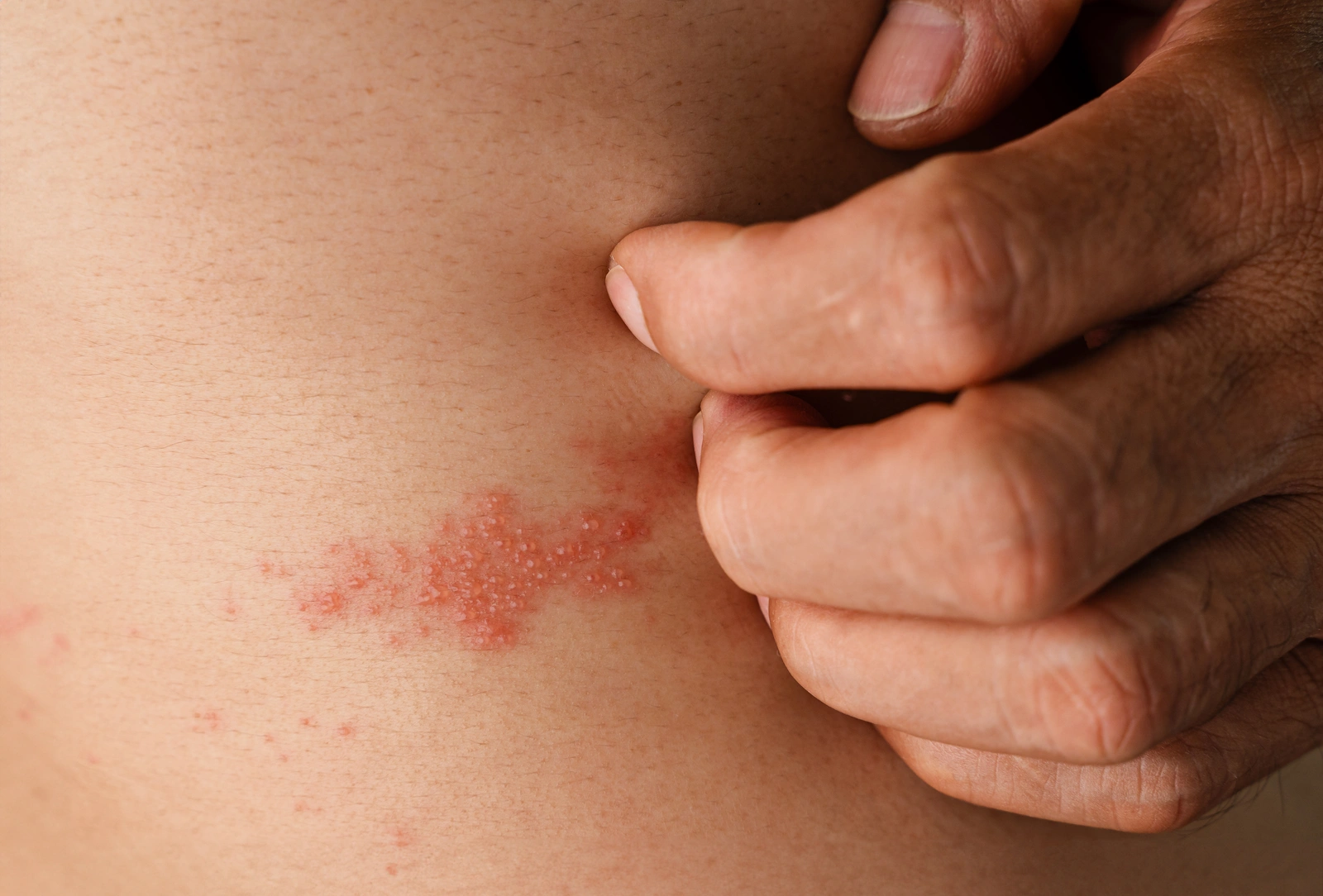
The clearest sign is a painful rash that appears on one side of your body, usually in a band or strip. The rash typically follows the path of a nerve.
Before the rash appears, you may feel tingling, burning, or shooting pain in the area for a few days. Some people mistake this for a pulled muscle or other injury. This early pain is often the first clue.
The rash itself starts as red bumps that quickly fill with fluid, forming blisters. These blisters are usually very tender. After a few days, the blisters begin to dry out and crust over. The whole process from rash to crusting usually takes two to four weeks.
Other symptoms can include fever, chills, fatigue, and headache. Some people feel unwell for a day or two before the rash appears.
If you think you have shingles, the sooner you seek treatment, the better. Antiviral medication works best when started within 72 hours of the rash appearing.
When to see a healthcare professional
You should see your GP or contact a pharmacy as soon as possible if you think you have shingles. Early treatment can reduce pain, speed healing, and lower the risk of complications.
Seek urgent care if the rash is near your eye, if you have severe pain, if the rash covers a large area, or if you have signs of infection such as pus or increasing redness around the blisters.
Do not wait to see if it goes away on its own. Shingles can be very painful, and some people develop long-term pain even after the rash heals. This is called post-herpetic neuralgia.
Treatment options
Antiviral tablets
Your GP or pharmacist can prescribe antiviral medication such as aciclovir, valaciclovir, or famciclovir. These tablets work best when started within 72 hours of the rash appearing. They reduce the severity of the infection, speed healing, and lower the risk of complications. You will usually take them for seven to ten days.
Pain relief
Over-the-counter paracetamol or ibuprofen can help with pain. Some people need stronger pain relief, which your GP can prescribe. Keeping the rash clean and dry, and wearing loose clothing, also helps reduce discomfort.
Topical treatments
Calamine lotion or other soothing creams can provide temporary relief. Avoid scratching the blisters, as this increases the risk of infection and scarring.
What happens after the rash clears
Most people recover fully within two to four weeks. The rash dries up and the skin heals. However, some people experience pain in the area where the rash was, even after it has completely cleared. This is post-herpetic neuralgia, and it can last for months or even years. It is more common in older people.
If you develop ongoing pain after shingles, speak to your GP about pain management options.
Can you prevent shingles?
Yes. The shingles vaccine is available and is highly effective at preventing the infection or reducing its severity if you do get it. The vaccine is recommended for people aged 50 and over, and for younger people with weakened immune systems.
If you have had shingles before, you can still benefit from the vaccine. It reduces the risk of shingles recurring.
Common questions
How long does shingles last? The rash typically lasts two to four weeks from first appearance to complete healing. Pain may persist longer in some cases.
Can I go to work with shingles? You can go to work if you feel well enough, as long as you keep the rash covered. You cannot spread shingles to others, but you could spread chickenpox to anyone who has never had it and touches the rash.
Is shingles contagious? You cannot catch shingles from someone else. However, if you have shingles and someone who has never had chickenpox touches your rash, they could develop chickenpox.
What is the difference between shingles and cold sores? Cold sores are caused by a different virus (herpes simplex) and appear on or around the lips. Shingles appears as a band or strip on one side of the body and is much more painful. They are separate conditions.
Should I see my GP or can I go to a pharmacy? You can speak to a pharmacist first. Many pharmacies, including Fulham Palace Pharmacy, can advise on shingles symptoms and arrange treatment. If your symptoms are severe or you have complications, your GP may need to be involved.
Is the shingles vaccine free? The shingles vaccine is available free on the NHS for people aged 65, and for some younger people with weakened immune systems. Private vaccination is also available.
If you think you have shingles, do not delay seeking advice. Fulham Palace Pharmacy in Fulham is open for same-day consultations and can assess your symptoms, arrange treatment if needed, and discuss the shingles vaccine to protect you in future. Book your appointment today or speak to a pharmacist in store.